
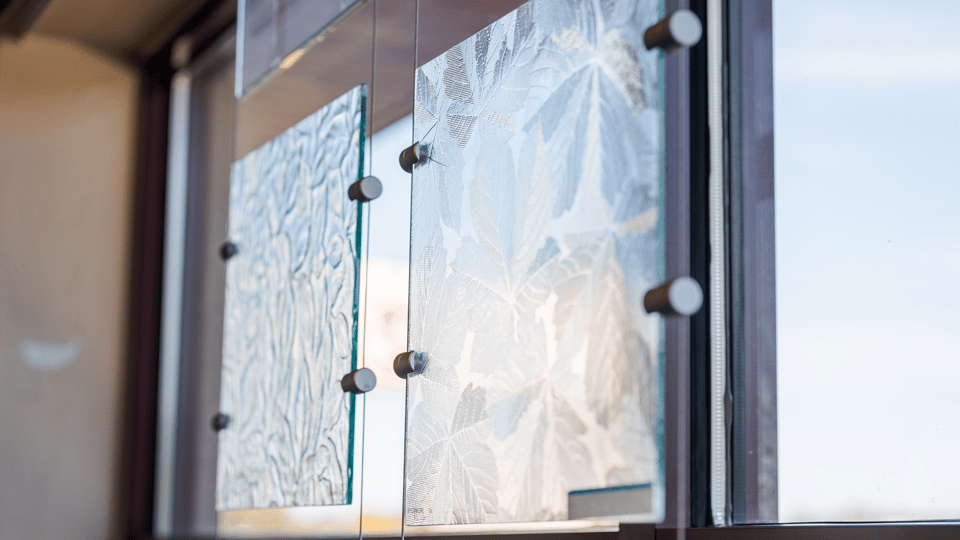
Decorative glass isn't just for the bathroom window anymore. Homeowners are using patterned and textured glass throughout the house — kitchen cabinets, pantry doors, room dividers, even stair railings — to add privacy and visual interest without closing off a space.
Central Minnesota homes have leaned hard into open floor plans over the last decade, and that's part of what's driving the shift. Open concept living looks great until you need a little privacy for a home office, pantry, laundry room, or shower. Decorative glass solves that without putting up a solid wall and losing the light. It's a small design choice that changes how a room actually functions, not just how it looks.
One thing worth knowing upfront: selection and cost vary a lot depending on where the glass goes. Cabinet inserts pull from a wide range of patterns, while heavier applications like shower doors, partitions, and railings are more limited and cost more. That's exactly what a showroom visit sorts out — we'll walk you through what's realistic for your specific project.
Kitchen Cabinet Inserts

Swapping a few solid cabinet doors for pattern glass inserts breaks up a wall of cabinetry and adds texture without turning your kitchen into an open display case. A reeded or rain-textured glass shows off shape and color while blurring the actual contents, so your everyday dishes look intentional.
Modern kitchens tend to reach for cleaner, more linear textures (think reeded or fluted glass), while more traditional kitchens still favor classic frosted or seeded glass. This is also where the selection is widest. Cabinet inserts use thinner glass, and that's the category with the most stocked pattern options. Inserts work best on upper cabinets near a window or under-cabinet lighting, where the glass actually catches light.
Our pattern glass gallery shows the full range of options we typically stock for cabinetry.
Pantry and Laundry Room Doors
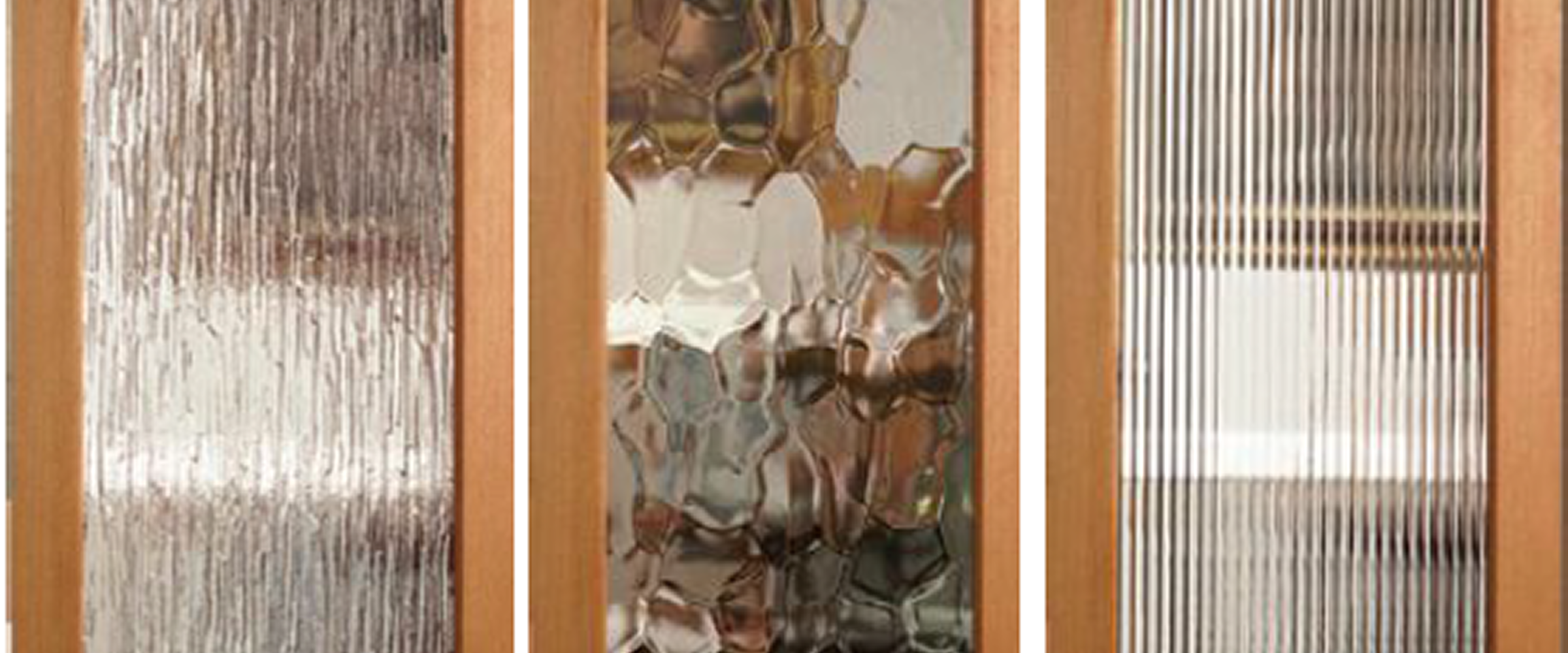
A solid door on a pantry or laundry room does its job, but it also closes the space off completely. A glass pantry door lets light travel from an adjacent room into a space that usually doesn't have its own window, while still keeping the mess out of view.
This is one of the more practical upgrades on this list. It solves a real lighting problem in rooms that tend to be windowless by design. Since it's typically a glass panel set into a solid door, it draws from the same wide cabinetry-style selection covered above. Heavier textures (like reeded or hammered glass) tend to work best here since they hide contents almost completely while still passing light through.
Bathroom Privacy Solutions
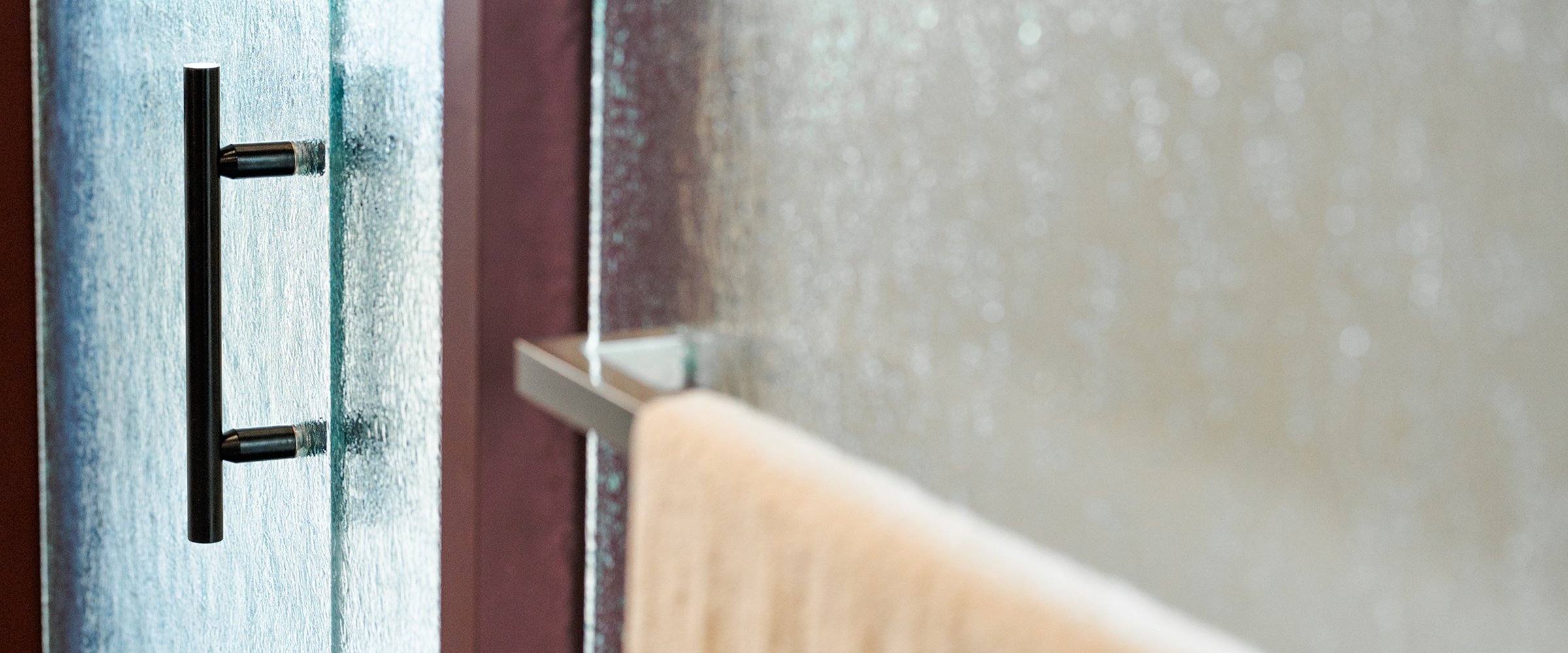
Bathrooms are still where most homeowners start with decorative glass, and for good reason — it's the one room in the house where privacy actually matters. But it goes well beyond the shower door these days, and a full shower enclosure is worth a quick reality check: it uses thicker glass than a cabinet insert, so the pattern selection is narrower and the cost is higher than clear glass. That's a normal part of any shower project, and it's a big reason this is worth talking through with glass experts.
A bathroom window is a different story. Thinner glass means more pattern options, and the same goes for interior partitions between a bathroom and an adjoining closet or vanity area, or a framed mirror that ties the room together.
If you're weighing options for a bathroom remodel, this is where it's worth browsing our residential gallery or seeing samples in person. The difference between a light frost and a heavier pattern is hard to judge from a photo.
Room Dividers and Interior Doors
Open-concept homes and home offices carved out of larger rooms are where a glass room divider really earns its keep. A full glass partition, whether it's a wall or a single glass door, separates a space visually and acoustically without making a room feel boxed in. Like shower doors, full partitions use thicker glass, so the pattern selection is narrower than what you'll see in the cabinet gallery.
This works well for a home office that needs a door for video calls, or a home gym that needs to stay separate from a living area without losing natural light.
If you're picturing something more elaborate, decorative film applied to clear glass is worth asking about. It opens up a much wider range of looks, including exterior-grade options. We don't apply film in-house, but we work with a trusted partner who does.
Stair Railings and Accent Features
Glass railings are less about privacy and more about making a statement. Frosted glass is generally the most readily available option here. If you're picturing more visual variety along a staircase, ask us directly — we can tell you what's realistic for your specific railing.
Choosing the Right Pattern
Once you know where in the house you're adding decorative glass, a few things shape which pattern actually works:
- Application: Cabinet inserts and smaller panels pull from a wide selection. Full shower doors, partitions, and railings use thicker glass, so the options narrow and the price goes up. It's worth talking to a glass expert before you fall in love with a specific look.
- Privacy and light: Heavier textures obscure more and let in less light; lighter textures like rain glass let more light through with a bit less privacy.
- Cleaning: Deeper patterns tend to hide smudges and water spots better than smoother textures, though a standard glass cleaner works fine on either.
- Code requirements: Certain spots in a home — near doors, in bathrooms, on stairs and railings — require tempered safety glass, and not every pattern can be tempered.
There's no single "right" pattern. it depends on the room, the application, and how much privacy you actually need.
Key Takeaways
- Pattern selection depends heavily on where the glass goes — cabinet inserts have the widest range; shower doors, partitions, and railings are more limited.
- Certain spots in the home require tempered safety glass by code, which can affect which patterns are realistic.
- Decorative film on clear glass is a flexible, budget-friendly alternative when a specific look isn't available in glass alone.
- Seeing samples in person and talking through your specific project beats guessing from a photo.
Frequently Asked Questions
Is decorative glass more expensive than regular glass?
Yes. Plan on at least double the cost of clear glass on the low end, depending on the pattern and where it's going. It's a real cost difference worth factoring into your budget.
Can decorative glass be used outdoors?
It's less about an "outdoor rating" and more about tempered safety glass. Certain spots in a home — near doors, in bathrooms, on stairs, and on railings — require tempered glass by code, and most outdoor applications fall under similar requirements. Not every pattern can be tempered, which is part of what determines whether a specific look works for your project.
Can I get any pattern in any thickness?
Not always. Thinner cabinetry-grade glass offers the widest selection. Thicker glass for shower doors, partitions, and railings is more limited, and highly custom patterns can come with a real jump in price and lead time. Worth asking about early so there are no surprises.
Does decorative glass reduce natural light?
It reduces light less than a solid wall or door would, but more than clear glass. Lighter textures like rain glass let in nearly as much light as clear glass; heavier textures like frosted or hammered glass cut down more of it while adding more privacy.
Is decorative glass hard to clean?
It's not harder to clean, just different. Smooth textures show water spots and fingerprints more easily, while deeper patterns hide them better but can collect more dust in the grooves. A regular glass cleaner works fine either way.
See It in Person
Photos only tell you so much about how a pattern will look in your actual space, and what's realistic depends on where it's going. Stop by our St. Cloud showroom to see our full range of decorative glass options in person and talk through what fits your project. Ready to get started sooner? Request a free estimate instead.